

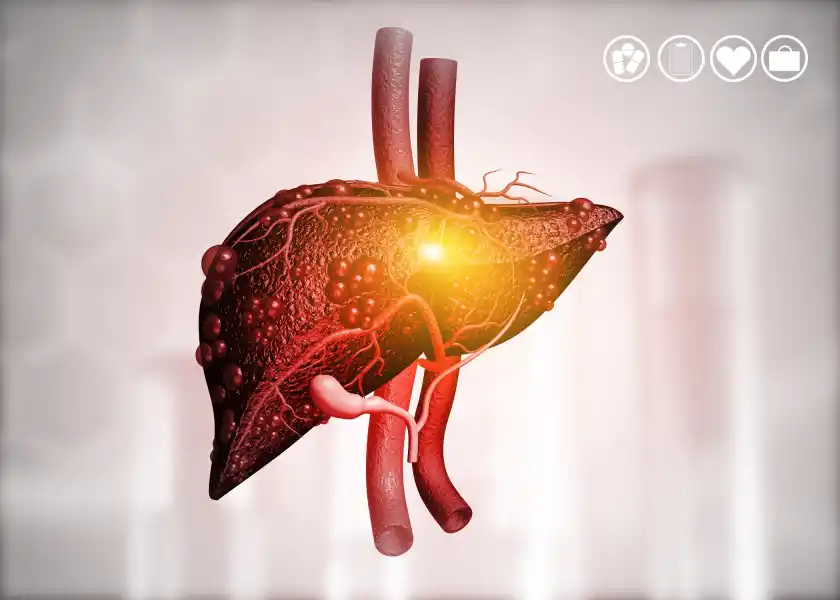
Liver cirrhosis is a chronic disease in which normal liver tissue is gradually replaced by scar tissue. According to the World Health Organization, complications of cirrhosis cause more than 1 million deaths worldwide each year. When standard therapy no longer provides a significant effect, patients begin to look for alternative options, and stem cell treatment for cirrhosis is often discussed as a possible way to slow liver damage and improve quality of life.
What Happens in Liver Cirrhosis
To understand the potential of cell therapy, it is important to clarify what exactly happens in the body. Cirrhosis develops gradually, often against the background of chronic hepatitis, alcohol abuse, non-alcoholic fatty liver disease, or autoimmune processes.
Main changes in cirrhosis include:
- death of hepatocytes — liver cells;
- formation of fibrosis and scar tissue;
- impaired blood flow within the liver;
- reduced synthesis of proteins and clotting factors;
- accumulation of toxins in the blood.
Patients face serious problems: persistent weakness, ascites (fluid accumulation in the abdomen), bleeding from esophageal varices, and hepatic encephalopathy. In advanced stages, the only radical treatment method remains liver transplantation, but donor organs are insufficient and waiting lists can last for years.
How Stem Cells Work in Liver Damage
Stem cells are cells capable of self-renewal and differentiation into various types of tissues. In cirrhosis therapy, mesenchymal stem cells obtained from bone marrow or adipose tissue are most commonly used.
The proposed mechanism of action includes:
- Reduction of inflammation due to an immunomodulatory effect.
- Stimulation of regeneration of the patient’s own liver cells.
- Slowing down the progression of fibrosis.
- Improvement of microcirculation within the organ.
It is important to understand that stem cells do not completely “replace” a destroyed liver. Rather, they create conditions for the recovery of the remaining functional tissue. Clinical studies have reported improvements in liver function indicators — reduced bilirubin levels, improved albumin levels, and better MELD scores in some patients.
After cell administration, patients often expect rapid results, but the effect develops gradually and may be moderate. This can lead to disappointment among people hoping for a “miracle cure.”
What Clinical Studies Show
Over the past 15 years, several dozen studies on cell therapy for cirrhosis have been published. Most of them are small phase II clinical trials involving 20 to 100 patients.
According to systematic reviews:
- 40–60% of patients show improvement in biochemical blood parameters;
- within 6–12 months after therapy, some patients experience a reduction in ascites severity;
- short-term mortality may decrease compared to control groups;
- serious complications are rare, but risks cannot be completely excluded.
However, the data remain inconsistent. There are no large multicenter phase III studies with follow-up periods longer than 5 years. This means that long-term effectiveness and impact on survival are not yet fully confirmed.
Patients often encounter conflicting information from different clinics. Some promise almost complete liver restoration, while others speak only about a supportive effect. That is why it is essential to rely on evidence-based medicine rather than promotional claims.
Advantages and Limitations of the Method
Any therapy should be evaluated in terms of both benefits and risks. Stem cells are no exception.
Potential advantages:
- minimally invasive procedure;
- possibility of use when no donor is available;
- relatively low risk of severe adverse reactions;
- improved quality of life in some patients.
Main limitations:
- high cost of treatment;
- lack of unified international protocols;
- variability of results;
- inability to fully replace transplantation in end-stage disease.
People with decompensated cirrhosis are often in severe condition and hope for a rapid effect. However, if more than 70–80% of liver tissue is destroyed, no method, including cell therapy, can fully restore the organ to normal function.
Liver cirrhosis remains a serious disease with a high risk of complications. The use of stem cells shows promising results, especially in early stages, but it is not yet a universal solution. It is a promising area of regenerative medicine that requires further research. Patients should obtain information from reliable sources and make decisions together with specialized healthcare professionals, carefully weighing the real possibilities of the method and its limitations.