

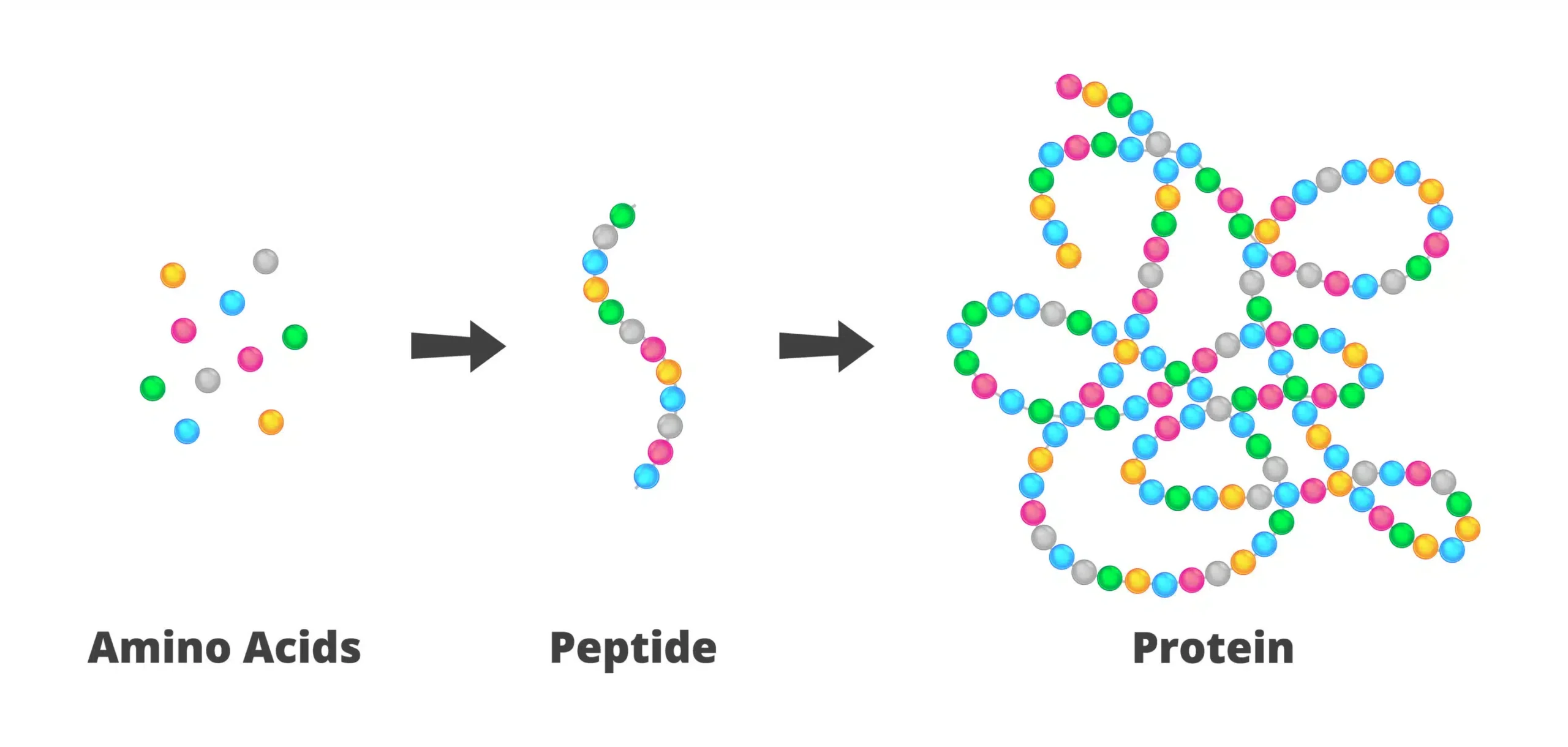
Peptides are short chains of amino acids that participate in many processes in the body. They differ in structure, number of amino acids, and biological role, so it is incorrect to group all peptides into a single category. Specialized products can be selected and the available range can be explored on the website https://pharma-global.shop/, where products in the relevant category are presented. To understand the differences between such compounds, it is important to look at their main types and characteristics.
What Peptides Are and How They Are Structured
A peptide is formed when several amino acids are connected to one another by peptide bonds. It is the amino acid sequence that largely determines the properties of the resulting compound. Relatively short chains are usually called peptides, while longer structures are classified as proteins.
Depending on the number of amino acids, several groups are distinguished:
- dipeptides consist of two amino acids;
- tripeptides include three amino acids;
- oligopeptides contain a small number of amino acid residues;
- polypeptides are longer chains.
In practice, the boundary between a peptide and a small protein is not always strict. A figure of approximately 50 amino acids is often used as a reference point: shorter chains are usually classified as peptides.
What Types of Peptides Are Distinguished by Their Action
One of the clearest classification methods is based on the functions of the compounds. Different peptides can participate in signal transmission between cells, regulate certain processes, or interact with receptors.
The main groups include:
- Signal peptides. They transmit specific biological signals to cells and trigger related processes.
- Regulatory peptides. They participate in the control of various physiological reactions.
- Transport peptides. They help transport certain substances or ions.
- Antimicrobial peptides. Some natural compounds in this group are part of the body’s protective mechanisms.
- Peptide hormones. They perform signaling functions and may influence the activity of various organs and systems.
The differences between these groups are related not only to their composition, but also to the cellular structures they interact with.
Natural and Synthetic Peptides
By origin, peptides are divided into natural and artificially produced compounds. Natural substances are formed in living organisms and perform specific biological functions. Synthetic peptides are created using laboratory methods.
The main differences are as follows:
- natural peptides are produced in the body or occur in living systems;
- synthetic compounds are obtained through controlled chemical or biotechnological production;
- the structure of a synthetic peptide may reproduce a natural sequence;
- some compounds are deliberately modified to improve stability or other required characteristics.
Modern methods make it possible to define amino acid sequences quite precisely. At the same time, even a small structural change can noticeably affect the properties of a substance.
How Peptides Differ from One Another
When selecting or studying a specific peptide, the group name alone is not enough. Compounds can differ significantly in molecular weight, stability, and mechanism of action.
The following parameters are especially important:
- the length of the amino acid chain;
- the amino acid sequence;
- the spatial structure;
- the stability of the compound;
- the ability to interact with specific receptors.
People often encounter a situation where different products are simply called “peptides,” even though their purpose and characteristics are completely different. Therefore, the properties of one compound cannot automatically be applied to another.
Peptides are a large group of compounds that differ in the number of amino acids, structure, and functions. They include signal, regulatory, transport, hormonal, and other types. Therefore, when studying a specific peptide, it is important to look not only at its name, but also at its composition, mechanism of action, product quality, and intended area of use.